How to Create Smart Revision Notes With AI (2026 Guide)
It’s 11 p.m., the exam is in nine hours, and you’re staring at a 40-page chapter you highlighted in four colours but never actually revised. This is the exact moment most students start Googling “AI for revision notes” — not out of curiosity, but out of panic.
Here’s the uncomfortable truth: the problem was never that you lacked notes. It was that your notes were built for taking, not for recalling. Learning how to create smart revision notes with AI fixes that gap — it turns raw chapters, PDFs, and scattered notebook pages into short, testable, exam-ready material, in a fraction of the time manual note-making takes.
This guide walks through a repeatable method, real tool comparisons, and the research behind why this actually works — not just a list of apps to try.
Table of Contents
- Why It Works
- Research-Based Evidence: Why Active Recall Beats Rereading
- How to Use AI for Exam Revision: A 5-Step Method
- Features and Benefits of an AI Study Notes Generator
- Real Examples: AI Revision Notes for Students Across Exams
- Best AI for Revision Notes: Comparing Top Tools
- Common Mistakes Students Make While Creating AI Study Notes
- Smart Study Notes Using AI: Best Practices and Pro Tips
- Frequently Asked Questions About Using AI for Exam Revision
- Key Takeaways
- Conclusion
How to Create Smart Revision Notes With AI: Why It Works
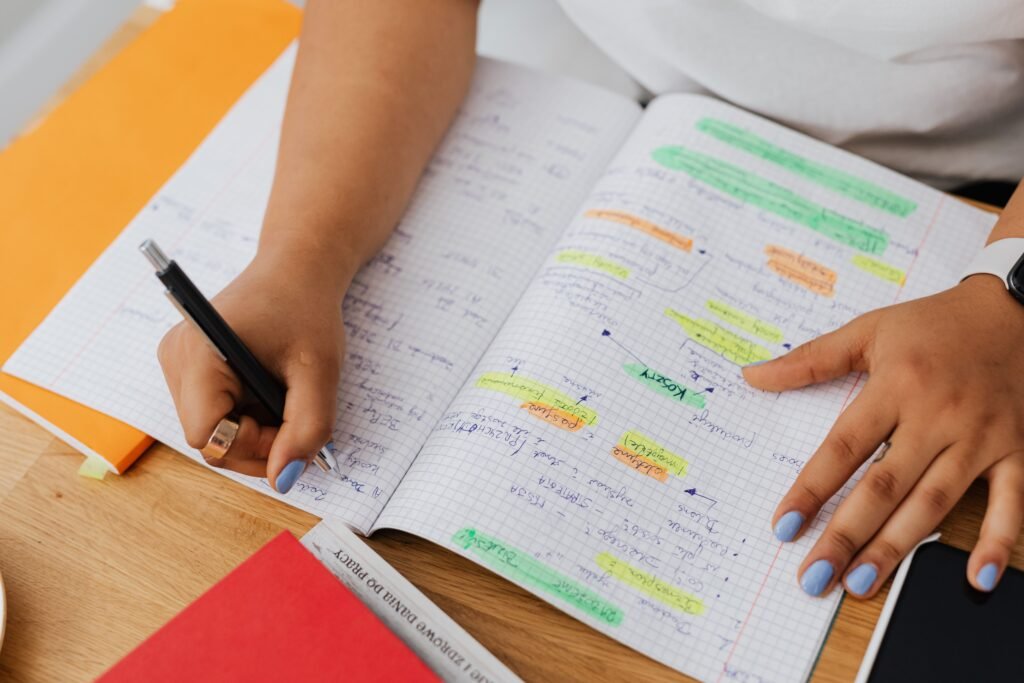
Most students don’t fail exams because they didn’t study. They fail because they re-read instead of recalling. Rereading a chapter feels productive because the material looks familiar — but familiarity isn’t the same as being able to write the answer from memory in an exam hall.
AI revision notes solve a narrow but important part of this problem: they compress long material into structured, testable formats — summaries, flashcards, and question sets — much faster than doing it by hand. That saved time has a real ripple effect. Less time spent formatting notes means more time spent actually testing yourself, which is what drives retention.
It’s reasonable to expect that a student who uses AI to build notes in 20 minutes instead of 2 hours will have more energy left for practice questions — the part of revision that learning research consistently shows matters more than passive review.
Research-Based Evidence: Why Active Recall Beats Rereading
This isn’t just a productivity claim — it’s backed by decades of memory research.
The testing effect (sometimes called retrieval practice) is one of the most consistently replicated findings in learning science. A well-known 2006 study by cognitive psychologists Henry Roediger and Jeffrey Karpicke found that students who tested themselves on material remembered significantly more of it a week later than students who simply reread the same material — even though the rereading group felt more confident about their grasp of it at the time. That gap between feeling prepared and being prepared is exactly what smart, testable AI notes are designed to close.
There’s also the forgetting curve, first described by psychologist Hermann Ebbinghaus in the 19th century: newly learned information fades quickly without review, but each spaced review flattens that curve and makes the memory more durable. This is the research basis for spaced repetition — reviewing flashcards at increasing intervals rather than all at once — which is why Step 5 of the method below matters as much as Steps 1–4.
In plain terms: AI can save you the hours spent formatting notes, but the retention gain comes from what you do with those notes afterward — testing yourself and spacing out your reviews, not just reading a tidier version of the chapter.
How to Use AI for Exam Revision: A 5-Step Method
This is the core workflow. Repeat it for every chapter or topic.
Step 1 — Feed AI Your Actual Source Material
What it is: Uploading your real textbook chapter, lecture PDF, or class notes into an AI tool, instead of typing a vague prompt like “explain photosynthesis.”
Why it matters: Generic prompts pull generic answers from the model’s training data — which may not match your syllabus, exam board, or professor’s emphasis. Source-grounded tools reduce this mismatch significantly.
How to do it: Upload the PDF, scanned notes, or pasted text directly into a tool that reads and answers from your document, rather than asking it to “explain” the topic from memory.
Example: Instead of asking “explain the Indian freedom movement,” upload your history textbook’s chapter PDF and ask it to summarise only what’s in that chapter — this is the fastest way to convert textbook into revision notes with AI without losing syllabus accuracy.
Common mistake to avoid: Asking general knowledge questions without uploading your source material — you’ll get a technically correct but syllabus-mismatched answer.
Step 2 — Ask for a Structured Summary, Not a Wall of Text
Understanding a lesson is only the first step. The real challenge is turning it into revision material. For that, read How to Turn Class Notes into Exam Revision Notes with AI: Powerful 2026 Student Success Guide and see how students are converting class notes into powerful exam-ready summaries.
What it is: Requesting output in a specific format — headings, bullet points, key-term boxes — rather than a plain paragraph summary.
Why it matters: A dense paragraph is nearly as hard to revise from as the original chapter. Structure is what makes notes scannable during a quick revision pass — whether you create study notes with AI from a single chapter or an entire syllabus.
How to do it: Prompt with a format, for example: “Summarise this chapter as headings with 3–5 bullet points each, and list key terms with one-line definitions at the end.”
Example: A 12-page biology chapter becomes six headings, each with short bullets and a glossary of 10 key terms — reviewable in under 10 minutes.
Common mistake to avoid: Accepting the first summary without checking it against your textbook — AI can occasionally omit or misstate a detail.
Step 3 — Convert Summaries Into Active-Recall Material
Want to study smarter instead of harder? Discover the best AI tools for creating flashcards automatically and generate personalized study cards from PDFs, notes, and lecture slides in seconds.
What it is: Turning your structured summary into flashcards, short-answer questions, or a quiz — formats that force you to retrieve the answer, not just read it.
Why it matters: As the research above shows, passive reading creates a false sense of mastery. Active recall — trying to answer before checking — is what transfers information into long-term memory.
How to do it: Use an AI flashcards and revision notes tool to auto-generate question-answer pairs from your notes, or ask a chat-based AI to write 15 short-answer questions from the summary.
Example: A chemistry summary on chemical bonding becomes 20 flashcards covering definitions, examples, and one tricky exception per concept.
Common mistake to avoid: Only reading the flashcards front-to-back instead of testing yourself in random order — this defeats the purpose of active recall.
Step 4 — Fact-Check Anything You Didn’t Already Know
What it is: Cross-checking any fact, date, formula, or figure that’s new to you against your textbook or a reliable source before it goes into your final notes.
Why it matters: AI models can occasionally state something confidently that isn’t accurate — a risk that’s small but real, especially for niche syllabus details, numerical constants, or historical dates.
How to do it: Keep your textbook or class notes open alongside the AI tool. Anything you’re seeing for the first time gets a quick manual check.
Example: If an AI-generated note states a date for a treaty you don’t remember from class, verify it against your textbook before memorising it.
Common mistake to avoid: Treating AI output as automatically correct — it’s a drafting assistant, not a verified textbook.
Step 5 — Schedule Revisits, Don’t Make Notes Once and Forget Them
Many students struggle because they do not have a structured study schedule. If that sounds familiar, check out AI Tools for Creating a Study Timetable Automatically: 9 Powerful and Smart Solutions for Students in 2026 to learn how AI can create a personalized timetable in just a few minutes.
What it is: Reviewing your AI-generated notes and flashcards on a spaced schedule (for example, 1 day, 3 days, 7 days after creation) instead of only right before the exam.
Why it matters: As the forgetting-curve research above shows, spaced repetition is one of the most well-documented ways to move information into long-term memory — far more effective than one long cramming session.
How to do it: Most flashcard tools have a built-in spaced-repetition mode. Turn it on and let the app decide when to resurface a card, rather than reviewing everything daily.
Example: A student revising 100 flashcards over three weeks, spaced automatically, remembers noticeably more at exam time than one who reviews all 100 the night before.
Common mistake to avoid: Cramming all your AI-made notes in a single overnight session — this is the same rereading trap, just with better-formatted notes.

Features and Benefits of an AI Study Notes Generator
What it is: Beyond summarising, most AI study tools now offer source citations, audio overviews, and auto-generated practice questions from the same uploaded material.
Why it matters: These features reduce the manual work of switching between five different apps — one for notes, one for flashcards, one for practice tests.
How to do it: Look for tools that let you upload once and generate multiple outputs (summary, flashcards, quiz) from that same source, so your notes stay consistent across formats. If you simply want to summarize notes using AI without building a full flashcard set, most of these tools support that as a standalone step too.
Example: Uploading one chapter and generating a written summary, a set of flashcards, and a short quiz — all traceable back to the same source, reducing the chance of contradictory notes.
Common mistake to avoid: Using a different, unrelated AI chat for each format — this often produces inconsistent facts across your summary, flashcards, and quiz.
Real Examples: AI Revision Notes for Students Across Exams
- Engineering student, semester exams: Uploading lecture slides into a source-grounded AI note tool to generate a study guide and a timeline of formulas, then converting the glossary into flashcards for the final week.
- Class 12 board exam prep: Photographing handwritten class notes, having AI clean them into typed, structured notes, then generating short-answer practice questions in the exam’s expected format.
- Competitive exam aspirant: Feeding previous years’ question papers into an AI tool alongside the syllabus chapter, then asking it to highlight which sub-topics appear most often — a practical way to prioritise revision time before deadlines.
- University research-methods student: Uploading a stack of assigned journal articles into an academic summarizer to get structured, section-based flashcard summaries (background, methods, findings) before a literature-review viva.

Best AI for Revision Notes: Comparing Top Tools
Pricing and free-tier limits for AI tools change often — the details below reflect publicly available information as of July 2026 and are worth a quick check before you commit, since limits are revised frequently.
🧠 Google NotebookLM
Best For: Building notes strictly from your own uploaded sources — textbook PDFs, lecture notes, slides — with citations back to the exact page.
Who Should Use It: Students worried about AI making things up, since it answers only from what you upload rather than general knowledge.
When to Use It: When working through a specific chapter or set of lecture PDFs you want summarised faithfully, not generically.
Strengths:
- Free tier includes 100 notebooks, up to 50 sources each, and audio/video overviews for auditory revision
- Generates study guides, FAQs, and timelines directly from your sources
Watch Out:
- Daily chat and generation limits on the free tier can feel tight during intensive multi-subject sessions
- Files are processed on Google’s servers, so it’s not ideal for confidential material
🗂️ Knowt
Best For: Genuinely free AI flashcard and practice-test generation from your own notes, PDFs, or lecture videos.
Who Should Use It: Price-sensitive students who want Quizlet-style flashcards without hitting a paywall on core features.
When to Use It: The final step in the workflow above — after you have structured notes, not as your first stop.
Strengths:
- Core features (unlimited flashcards, AI generation, spaced-repetition study modes) stay free — no credit card required
- Built-in Quizlet import, so existing flashcard sets aren’t wasted effort
Watch Out:
- Its AI chatbot (“Kai”) and some auto-graded assessment tools sit behind the paid Ultra tier
- Community-made flashcard library is smaller than Quizlet’s
🔁 RemNote
Best For: Combining note-taking and spaced-repetition flashcards in one linked system, instead of switching between apps.
Who Should Use It: Students who want flashcards generated directly from the notes they’re already taking, especially for dense subjects like medicine or engineering.
When to Use It: During note-taking itself, so flashcards are created as you go rather than as a separate step afterward.
Strengths:
- Free plan includes unlimited notes and flashcards, plus a scientifically backed spaced-repetition scheduler
- AI can auto-generate flashcards and questions directly from notes, PDFs, or lecture transcripts
Watch Out:
- Free tier limits PDF annotations to 3 and image-occlusion cards to 5 — tight for heavy PDF users
- Has a real learning curve; not the fastest tool to pick up the night before an exam
🎧 Turbo AI (formerly TurboLearn AI)
Best For: Converting recorded lectures and YouTube videos into notes, flashcards, and quizzes in one pipeline.
Who Should Use It: Students with a lot of recorded lecture content who want it processed into revision material automatically.
When to Use It: Right after a lecture, before the details fade — feed in the recording and get a first-draft note set immediately. This style of AI note taking for exams works especially well for subjects with fast-talking professors.
Strengths:
- Handles audio, video, PDFs, and YouTube links in a single upload
- Generates flashcards, quizzes, and even audio-podcast-style summaries for on-the-go review
Watch Out:
- Free tier is genuinely restrictive (around 2 hours of lecture time and 1 PDF per month in most reviews)
- Free-plan limits aren’t clearly stated upfront, so students often hit the cap mid-session
💬 ChatGPT (Free / Go)
Best For: Turning messy notes or textbook PDFs into structured summaries and short-answer question sets through simple prompting.
Who Should Use It: Students who want a single, conversational tool for both summarising and generating practice questions.
When to Use It: Early in revision, when you’re converting raw chapters into a first-draft summary.
Strengths:
- Free tier is usable for occasional summarising and Q&A generation
- ChatGPT Go (around ₹399/month, with an India promotional period making it free for eligible users through most of 2026) raises daily message and upload limits significantly
Watch Out:
- Free and Go tiers have daily usage caps that can interrupt a long revision session
- General-knowledge answers can drift from your specific syllabus unless you upload your own source material
Want to move beyond simple AI answers? Learn how to use ChatGPT as a personal learning assistant to create study plans, generate quizzes, and master new skills faster.
📇 Quizlet AI
Best For: Students already inside the Quizlet ecosystem who want AI-assisted flashcard creation without switching platforms.
Who Should Use It: Students who’ve already got a summary and need a familiar, widely-used flashcard interface.
When to Use It: If your classmates or school already use Quizlet and shared study sets matter to you.
Strengths:
- Large library of student- and teacher-made flashcard sets to browse or reuse
- Spaced-repetition scheduling built in, which supports Step 5 of the method above
Watch Out:
- Several core AI features (Magic Notes, unlimited Learn/Test mode) sit behind a paid plan, and free-tier limits have tightened in recent years
- Reported pricing varies by source and region, so check the official upgrade page rather than trusting a single figure
For university-level literature reviews or research-paper-heavy revision, an academic summarizer like Scholarcy (limited free tier, paid plans from roughly $5–10/month) is also worth exploring — it structures papers into background/methods/findings sections rather than generic summaries.
Preparing for semester exams? Don’t miss our detailed guide on the best AI tools for students that can help you summarize notes, create flashcards, solve doubts, and revise faster before exams.
Common Mistakes Students Make While Creating AI Study Notes
What it is: Predictable ways students misuse AI note tools, based on how the workflow above typically breaks down.
Why it matters: Each mistake below quietly undoes the time AI is supposed to save.
How to avoid it: Build the checks below into your workflow from the start, rather than fixing them after a disappointing test score.
Example: A student who copies an AI summary straight into their answer sheet phrasing, without rewriting it in their own words, often struggles to recall it under exam pressure — because they never actually processed the material.
One common mistake to flag specifically: Trusting AI-generated numbers, dates, or formulas without a source check — this is the single highest-risk habit in the entire workflow.
Smart Study Notes Using AI: Best Practices and Pro Tips
What it is: Small workflow habits that compound into noticeably better retention over a revision cycle.
Why it matters: The gap between students who use AI well and those who use it poorly usually isn’t the tool — it’s the habits around it.
How to apply it:
- Keep one AI tool per source of truth (for example, NotebookLM for your syllabus PDFs) so your facts don’t drift across apps.
- Ask the AI to generate questions in the same format your exam uses (MCQ, short answer, long answer) — this makes practice feel closer to the real test.
- Rewrite at least the headings of any AI summary in your own words before treating it as final — this single step meaningfully improves recall.
Example: A student preparing for a board exam who reformats every AI summary into their own handwriting-style shorthand before adding it to their revision folder tends to recall it faster than one who just prints the AI output.
Common mistake to avoid: Chasing a new AI tool every week instead of getting fluent with one or two — tool-switching costs more time than it saves.
Frequently Asked Questions About Using AI for Exam Revision
Is it okay to use AI to make revision notes for board or competitive exams? Yes, as a note-formatting and practice-question tool — but the final understanding and fact-checking responsibility stays with you. Treat AI as a drafting assistant, not a substitute for reading your syllabus material.
Will AI-generated notes match my exact syllabus? Only if you upload your actual textbook or lecture material rather than relying on the AI’s general knowledge. Source-grounded tools like NotebookLM are built specifically for this.
Can I use AI for revision notes without paying anything? Yes. Free tiers on tools like NotebookLM, Knowt, RemNote, and ChatGPT cover the core workflow — summarising, basic flashcard creation — though daily usage limits apply and are worth checking before an intensive session.
How do I convert AI notes into flashcards for spaced repetition? Take your structured AI summary, paste the key terms and concepts into a flashcard tool’s AI generator (or write them manually), and turn on that tool’s spaced-repetition mode so reviews are automatically scheduled.
What’s the biggest risk of using AI for exam revision? Accepting unverified facts, and over-relying on AI to the point where you stop engaging actively with the material — both of which undercut the actual goal of revision, which is recall, not just neat notes.
Key Takeaways
- Smart revision notes are testable and structured, not just neatly summarised.
- The core method: upload real source material → structured summary → active-recall flashcards/questions → fact-check anything new → spaced review.
- Retrieval practice and spaced repetition aren’t just study tips — they’re two of the most well-replicated findings in memory research.
- Source-grounded tools (like NotebookLM) reduce the risk of syllabus mismatch better than general-purpose chat tools.
- Free tiers across NotebookLM, Knowt, RemNote, and ChatGPT cover most student needs; paid tiers mainly remove daily usage caps.
- The biggest risk isn’t the AI — it’s skipping the fact-check and rewrite-in-your-own-words steps.
Conclusion
Smart revision notes aren’t about finding the “best” AI tool — they’re about following a method that turns long material into something you can actually recall under exam pressure. Start with one chapter today: upload it, ask for a structured summary, turn it into five flashcards, and test yourself tomorrow. That single repeatable loop, backed by decades of memory research and done consistently, will do more for your results than switching between apps ever will.
Suggested Next Action: Pick your hardest upcoming chapter and run it through Steps 1–3 of this method today, before moving on to a new topic.
Want to learn the practical ways students are already using AI in everyday learning? Read our complete guide on How Students Use AI to Study Smarter (Without Cheating) and discover 12 proven techniques to improve learning, revision, and exam preparation.





5 Comments